St. Augustine, Bermuda or Zoysia: Picking the Right Sod for a Fort Worth Yard
Here's what to think through before you pick a grass type for a new lawn in Fort Worth or Keller.
September 23, 2026 · 4 min read
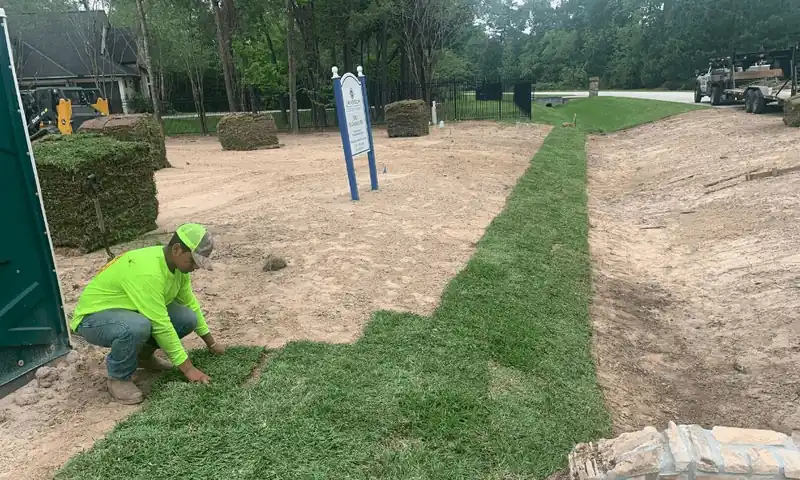
If your lawn is more dirt and weeds than grass, or you're tired of patching a section that never fills in, replacing it with sod is usually faster than waiting for seed to take. But before a crew shows up with pallets of turf, you have a decision to make: which grass. Hoyer's Home Lawn and Garden installs St. Augustine, Bermuda and Zoysia sod around Fort Worth and Keller, and each one behaves differently once it's down in a North Texas yard.
The three sod types, in plain terms
- St. Augustine is a dense, wide-bladed grass that's popular in North Texas because it tolerates some shade better than most warm-season grasses, though it still wants a good amount of sun to stay thick.
- Bermuda is a sun-lover. It spreads aggressively, bounces back fast from foot traffic, and is a common pick for yards that get hammered by kids, pets or a trampoline, but it thins out quickly in shady beds under trees.
- Zoysia is slower to establish than Bermuda but forms a dense, carpet-like lawn once it fills in, and it's known for holding up well through dry stretches once it's rooted.
None of these is universally 'better.' The right call depends on how much sun your yard actually gets through the day, how much wear it takes from kids, dogs or entertaining, and how much mowing and edging you want to keep up with. A front yard shaded by mature oaks is a different problem than an open backyard that bakes all afternoon, and it's worth walking your own property at different times of day before you decide.
It's also worth thinking about upkeep once the sod is established. Bermuda generally wants more frequent mowing during peak growing season than St. Augustine or Zoysia, since it grows fast and spreads by both runners and rhizomes, while St. Augustine and Zoysia tend to fill in a little more slowly and forgive a missed mowing week more easily. If you already have a mowing routine, or you're planning to hand that off to a maintenance service, it's a reasonable factor to weigh alongside sun and shade.
Why the prep work matters more than the sod itself
New sod can look great for a few weeks and then go patchy if the ground underneath wasn't ready for it. Hoyer's says it doesn't cut corners on that step: prep work carries all the way through to a post-install irrigation check, rather than rolling sod straight onto old, compacted turf and hoping it roots. Grading, clearing old growth and making sure water can actually reach the new roots matters more, over time, than which grass variety you picked.
Hydroseeding as an alternative
Sod isn't the only way to get grass established. Hoyer's also offers hydroseeding, a slurry of seed, mulch and fertilizer sprayed over the prepared ground. It's not an instant lawn the way sod is, but Hoyer's calls it an effective choice both for erosion control and for cost, which can make it worth asking about for a large area, a slope, or a section of yard where budget matters more than an overnight transformation.
Watering your new sod
Whichever grass you choose, new sod lives or dies on the watering schedule in the first few weeks. Hoyer's aftercare guidance for new sod is simple:
- Water the new sod thoroughly the same day it goes down, before the roots have a chance to dry out.
- Keep the soil consistently moist for about the first two weeks while the roots knit into the ground below.
- After that, shift to deep, infrequent watering rather than frequent light sprinkling, which encourages the roots to grow down instead of staying near the surface.
Local watering restrictions and any HOA rules about irrigation schedules vary by city and by neighborhood, so it's worth checking with your city or HOA before you set a sprinkler timer, especially in the first couple of weeks when new sod needs more frequent watering than an established lawn is normally allowed.
New sod also generally needs a little patience before it's treated like an established lawn. Most homeowners hold off on the first mow until the grass has rooted in enough that it doesn't pull up when you walk on it, and it's common to keep foot traffic and pets off a fresh section for a couple of weeks while the roots take hold. That patience early on is usually what separates a new lawn that fills in evenly from one that struggles in patches later.
If you're weighing St. Augustine against Bermuda or Zoysia for a Fort Worth or Keller yard, or you want to talk through whether hydroseeding makes more sense for your budget, Hoyer's Sod Installation & Hydroseeding service covers all three grass types plus hydroseeding. Call (682) 274-1521 with your address and a rough idea of the square footage, and the team can talk you through what fits your yard.
Hoyer's Home Lawn and Garden, (682) 274-1521
Call (682) 274-1521More articles
Bumpy Lawn? What Leveling and Topdressing Actually Fix (and Why Aeration Comes With It)
A look at what leveling and topdressing are, when a lawn needs them, and what to expect from the crew that does the work.
Permanent Lighting vs. Putting Up Christmas Lights Every Year: What's the Difference
Hoyer's installs both seasonal Christmas lights and permanent 48V lighting; here's how the two compare.