Drainage in a DFW Yard: French Drains, Channel Drains and Dry River Beds Explained
Three ways landscapers move water out of a yard that won't drain on its own, and when each one gets used.
September 23, 2026 · 3 min read
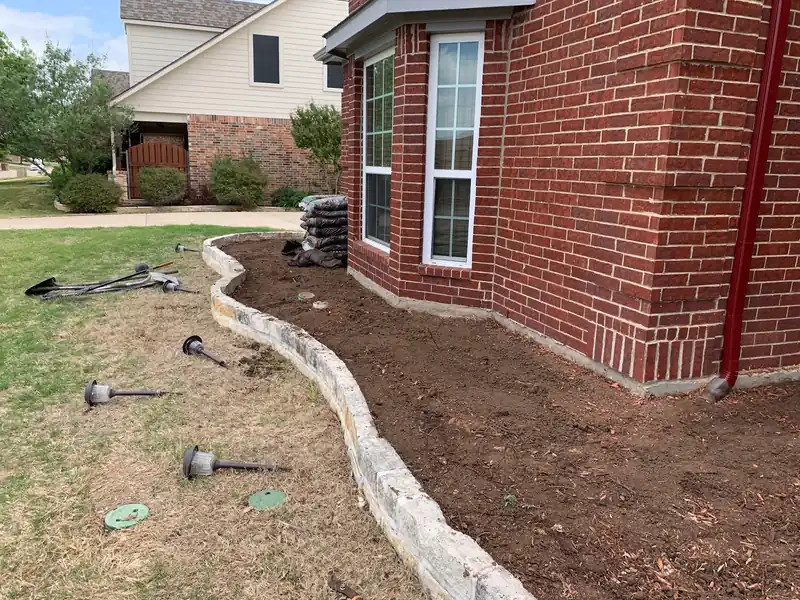
North Texas clay soil doesn't absorb water quickly, which is part of why so many yards in Fort Worth, Keller and the surrounding DFW area end up with a low corner that stays soggy for days after a storm, or a downspout that turns a section of lawn into mud every time it rains. Hoyer's Home Lawn and Garden offers irrigation repair, inspections and maintenance alongside three specific ways to move water out of a problem area: channel drains, French drains and functional dry river beds.
Channel drains
A channel drain is a long, narrow trench fitted with a grate along the top, usually placed to catch surface water running across a patio, driveway or walkway before it can pool or spread further into the yard. Because the grate sits at surface level, channel drains are typically used where you need to intercept water that's already moving across a hard surface, rather than water that's soaking down through soil.
French drains
A French drain works below the surface. It's a trench filled with gravel around a perforated pipe, buried at a slope so water that's soaked into the soil gets collected and carried away to a lower point or an outlet, instead of sitting underground near a foundation or a low spot in the lawn. French drains are the more common answer for a soggy patch of grass or a wet area near a foundation where the problem is water building up in the ground itself, not just water running across the surface.
Dry river beds
A dry river bed is a shaped channel lined with stone that looks decorative most of the year but is built to actually carry water during a storm, directing runoff along a defined path instead of letting it cut its own way across the yard. Hoyer's offers functional river beds, which is the distinction that matters: it's landscaping first, but it earns its place by doing real drainage work when it rains.
What's actually causing the problem in the first place is usually one of a few things: a downspout dumping water at a single point with nowhere to go, ground that slopes toward the house instead of away from it, soil so compacted that water sits on top rather than soaking in, or simply a low spot in an otherwise flat yard. Figuring out which of those applies to your property is most of the work in picking the right fix, since a channel drain won't help a soggy patch caused by underground compaction, and a French drain won't do much for water sheeting across a patio.
Which one fits your yard
- Surface water crossing a patio, walkway or driveway usually points toward a channel drain.
- A consistently soggy patch of lawn or standing water near a foundation usually points toward a French drain.
- A visible runoff path you'd rather make part of the landscaping than hide usually points toward a dry river bed.
It's common for a single yard to need more than one of these, especially on a property with more than one low spot or a downspout that dumps water somewhere the grading doesn't handle well on its own. An irrigation inspection is a reasonable place to start, since a drainage problem and a leaking or poorly placed sprinkler line can sometimes look similar from the surface, and Hoyer's offers irrigation inspections alongside the drainage work itself.
Before you dig
Where a drain outlet is allowed to discharge, and whether a given drainage fix needs a permit, depends on your city and can be affected by HOA rules about grading and runoff onto neighboring property. Check with your city or HOA before finalizing a plan, particularly if the drain would carry water toward a property line or a shared easement. It's also worth mentioning any recent grading changes on your own property or a neighbor's when you call, since a fix that worked for years can stop draining properly after nearby construction, a new fence line, or a change in how a downspout was routed.
If you've got a yard that won't drain on its own, Hoyer's Irrigation Services page covers channel drains, French drains, functional river beds and irrigation repair, inspections and maintenance. Call (682) 274-1521 with what you're seeing after a rain, and the team can help figure out which fix actually solves it.
Hoyer's Home Lawn and Garden, (682) 274-1521
Call (682) 274-1521More articles
St. Augustine, Bermuda or Zoysia: Picking the Right Sod for a Fort Worth Yard
Here's what to think through before you pick a grass type for a new lawn in Fort Worth or Keller.
Bumpy Lawn? What Leveling and Topdressing Actually Fix (and Why Aeration Comes With It)
A look at what leveling and topdressing are, when a lawn needs them, and what to expect from the crew that does the work.